2nd of September 2022 | 7 min read
The Ideological Trojan Horse
Crafting the Perfect Deception
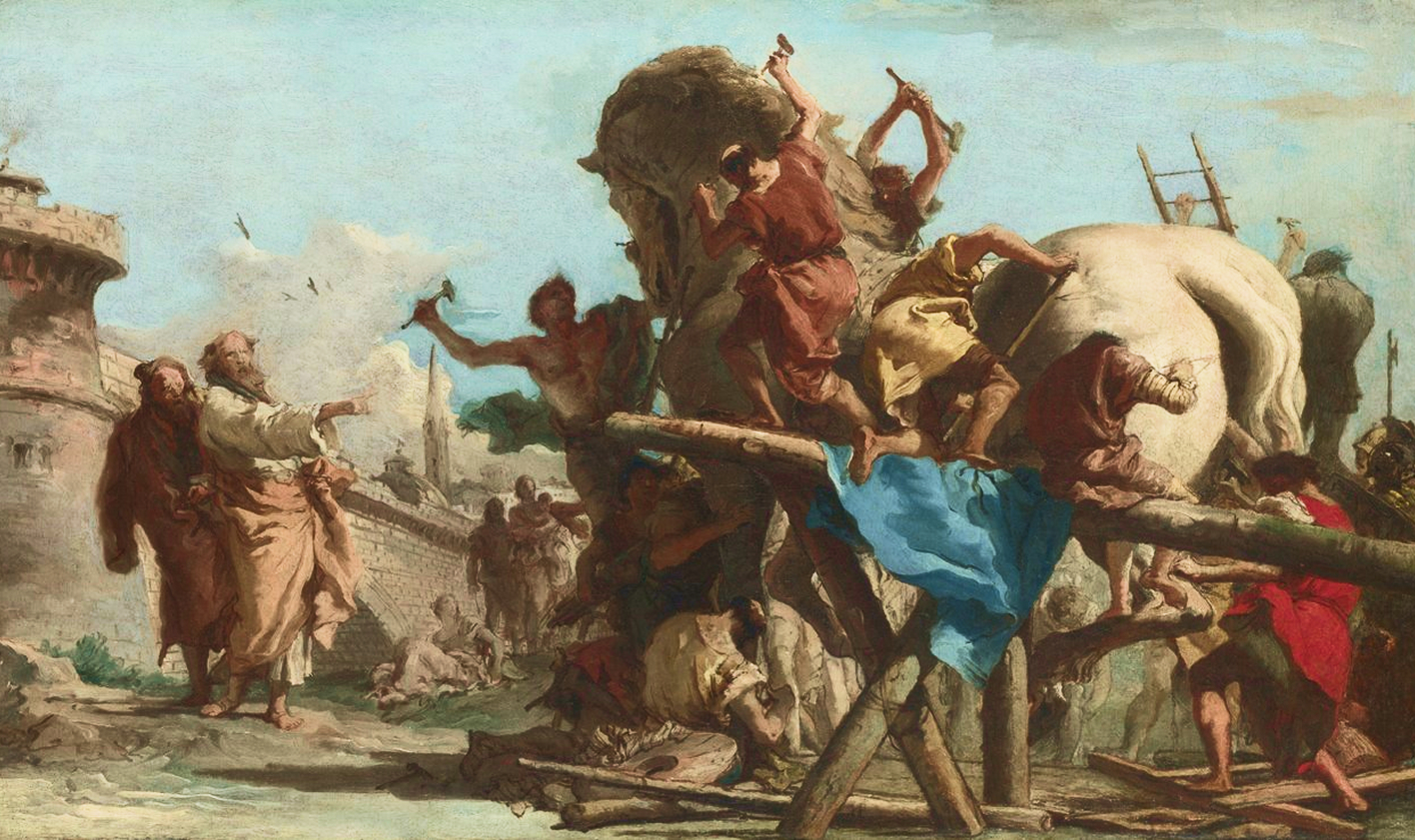
The greatest threat to our world isn't something dramatic like war, natural disaster, or economic collapse. The real danger is something far more subtle, something that slips in quietly, like the Trojan Horse. It's an idea, an ideology that promises freedom and new understanding but delivers confusion and division instead. Look at Giovanni Domenico Tiepolo's painting of the Trojan Horse being built, as seen below. The Greeks are constructing their weapon of deception, piece by piece, a gift designed to exploit Troy's desire to believe the war was over. We're witnessing the same construction today, except our Trojan Horse is built from questions that sound reasonable on the surface but undermine everything beneath.
At first, this idea seems harmless. It starts with small questions: "Is that really true?" or "What if we've been wrong all this time?" These might seem like good questions, the kind that encourage critical thinking and intellectual humility. After all, we're taught that questioning is how we learn. But slowly, over time, these small doubts begin to multiply. They grow louder until they're no longer just whispers of healthy skepticism. They start to drown out everything we once believed was certain. And before we even notice it, the very foundations of our understanding of reality begin to crack. The difference between productive questioning and destructive doubt is this: productive questioning seeks better answers, while destructive doubt rejects the possibility of any answer at all.
The danger of this Trojan Horse is that it doesn't attack head-on. It doesn't come with alarms or warnings. Instead, it quietly eats away at the very core of what we know as truth. Year after year, we hear messages like "Truth is subjective" or "What's true for you may not be true for me." These ideas sound nice, maybe even fair. They promise a world where we can all live in our own version of reality, free from judgment. But what happens when everyone's truth is different? What happens when the idea of truth itself becomes something no one can agree on? The result is a world where facts and logic lose their meaning. The very concept of objective truth, something that everyone could once agree on, begins to fade away. In this world, reality is no longer shared. It's personal, flexible, and tailored to each individual's perspective. And as this collapse unfolds, many people celebrate the newfound "freedom" of choosing their own truths, unaware that they've invited destruction into their homes.
This isn't just a mistake or a misunderstanding. What's happening is not accidental. Each doubt planted, each piece of false information spread, each boundary pushed, these are all part of a larger pattern. The Trojan Horse isn't just an innocent new idea. It's a methodology disguised as progress. The goal is simple: to divide us, to break apart the common understanding that holds society together. And by the time we realize the full cost, it's too late. The gates are closed, and the damage is done. The chaos is already inside.
Welcoming Our Own Destruction
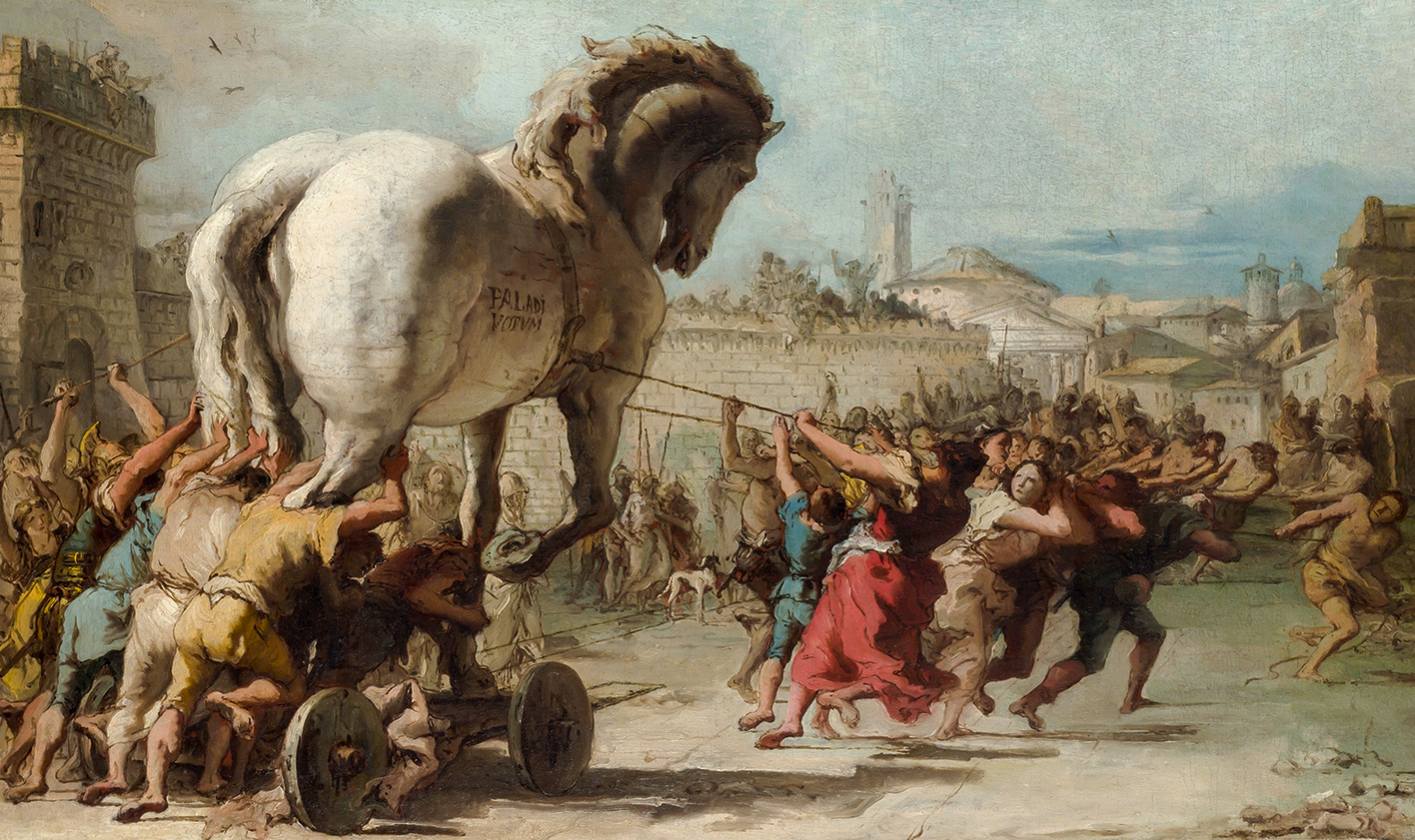
When the Greeks abandoned their camp and left the massive wooden horse behind, the Trojans faced a choice. Warnings came from those who sensed danger, but the promise was too tempting. The war appeared to be over. Victory seemed within reach. So they opened the gates and pulled the horse into their city, celebrating what they believed was a divine gift. Look at Tiepolo's painting of the procession. The people are jubilant, pulling their own destruction through the streets with pride and excitement, convinced they're witnessing a triumph.
We're doing the same thing today. We're pulling ideological trojan horses into our institutions, our communities, our own minds, because they promise something we desperately want. The idea that "your truth is just as valid as anyone else's" sounds liberating. It sounds egalitarian. It sounds like progress. Who wants to be the person saying some truths matter more than others? Who wants to be accused of gatekeeping reality? So we accept it. We bring it inside. We celebrate it as sophistication, as compassion, as evolution beyond rigid thinking. The promise is freedom from oppressive universal truths. But watch what actually happens once it's inside the gates.
Let's take the economy as an example. Once considered a pillar of stability, it now trembles under the weight of countless competing ideologies. One group insists that growth is the key to prosperity. Another argues we need to prioritize equity. Others demand that sustainability should come first. And with so many different frameworks clashing, no one can agree on what economic health even means anymore. The result? Paralysis. No one knows which direction to move. Tax policy becomes a battleground of opposing truths. Fiscal reform stalls indefinitely. The conversation about what's good for the economy fragments into so many pieces that people forget what the original question was. Everyone gets stuck, unable to act because they're too busy fighting over whose version of reality is correct.
And this isn't just about economics. It's happening in every part of society. Political institutions, once seen as uniting forces, now become echo chambers for fragmented ideologies. The very structures that were meant to bring people together are now at war with themselves. What was once civil discourse has turned into performative outrage and tribal signaling. The debates that should be solving problems are now just opportunities to score points against the other side. The result is a society unable to make decisions, unwilling to agree on basic facts, and trapped in a cycle of division that feeds on itself. The Trojan Horse spreads further. It weakens the very institutions that once provided stability and security. Questions about purpose, strategy, and necessity turn into moral crusades where no common ground exists. And as every discussion turns into an ideological battleground, the state becomes weaker. It's not just external threats we need to worry about. It's the self-inflicted damage caused by our inability to make decisions, to take action, and to trust any shared framework for understanding reality. The Trojan Horse has done its job. It's fractured society, and now those fractures are spreading.
When the Center Cannot Hold
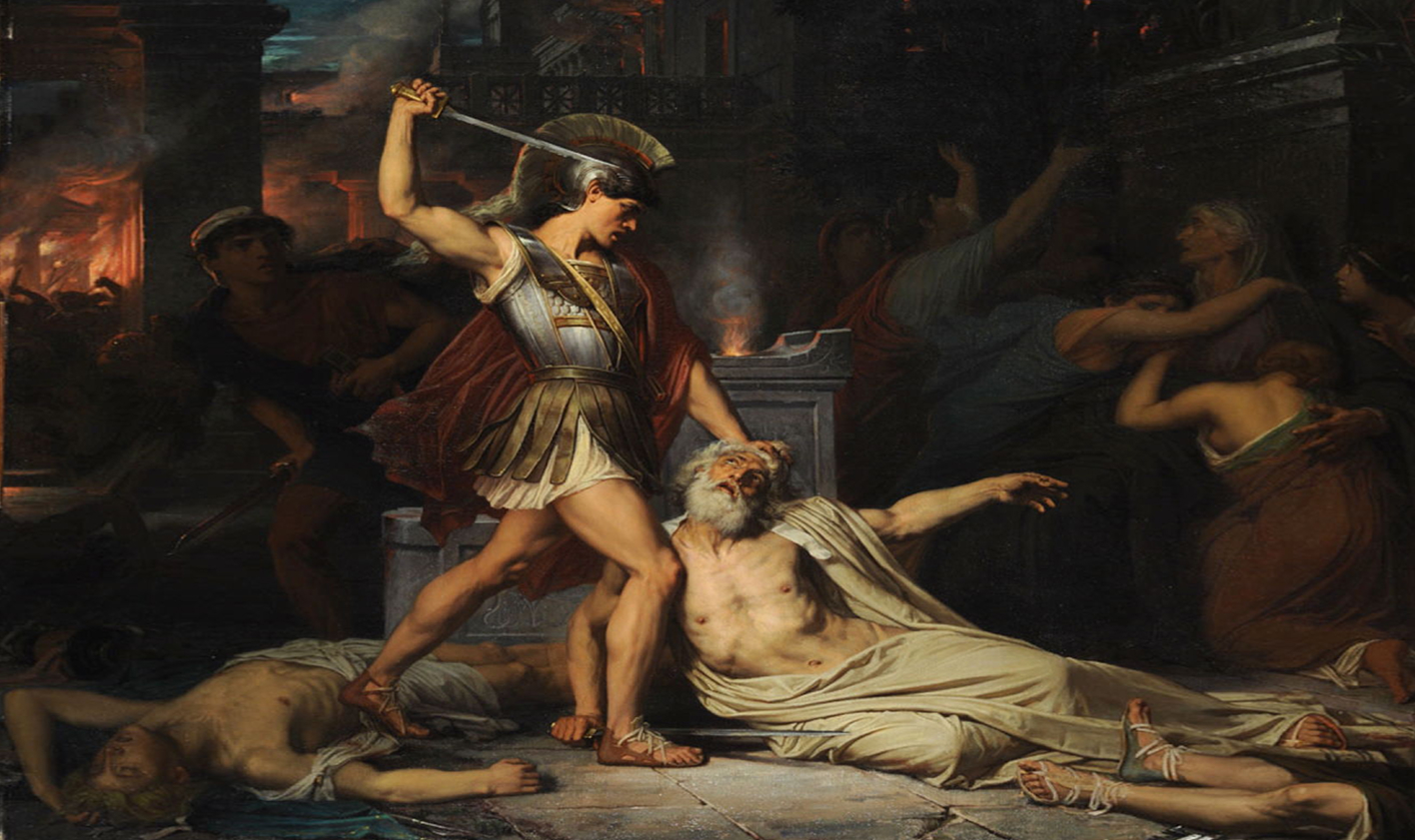
When the Greeks finally emerged from the horse under cover of darkness, their first target was Troy's leadership. The king's death, captured in Jules Joseph Lefebvre's painting, represents more than the murder of one man. It's the collapse of legitimate authority, the moment when the center cannot hold and everything falls apart. Without leadership, without a coherent command structure, the Trojans couldn't mount an organized defense. What followed wasn't a battle but a slaughter, chaos replacing order in a single violent night.
This is where the ideological Trojan Horse reveals its true poison. When shared standards of truth and evidence collapse, the institutions that once served as arbiters lose their authority. Not because they failed in their function, but because authority itself has been delegitimized. "Who are you to tell me what's true?" becomes the response to expertise. "That's just your interpretation" becomes the response to evidence. "You're pushing your reality on me" becomes the response to facts. And once that pattern is established, there's no mechanism left for resolving disputes, for building consensus, or for coordinating action based on shared understanding.
The absence of strong, trusted leadership leaves people asking: "What now?" "Who will guide us?" The shared purpose that once kept society moving forward shatters. Instead of answers, there are only more questions, more confusion, and more disunity. And in that vacuum, fear and opportunism rush in to fill the space. This is the moment when people stop looking for truth and start scrambling for comfort. They stop asking hard questions. Instead, they latch onto simple solutions, comforting lies, and easy answers that don't require real thought or difficult trade-offs.
In this new world, chaos becomes normalized. Dependence on quick fixes becomes the standard. The Trojan Horse doesn't need to burn the city to the ground. It only needs to convince us that the chaos we're living in is acceptable, maybe even inevitable. And the longer we live in this uncertainty, the more comfortable we become with it. This is the true danger: not the collapse itself, but our adaptation to it. The death of resilience. The acceptance of dysfunction as the new normal. When authority falls, when leadership crumbles, when the center fails to hold, we don't rebuild. We adjust. We learn to function without coherence. And that adjustment is far more dangerous than the initial collapse.
Living Comfortably in Ruins
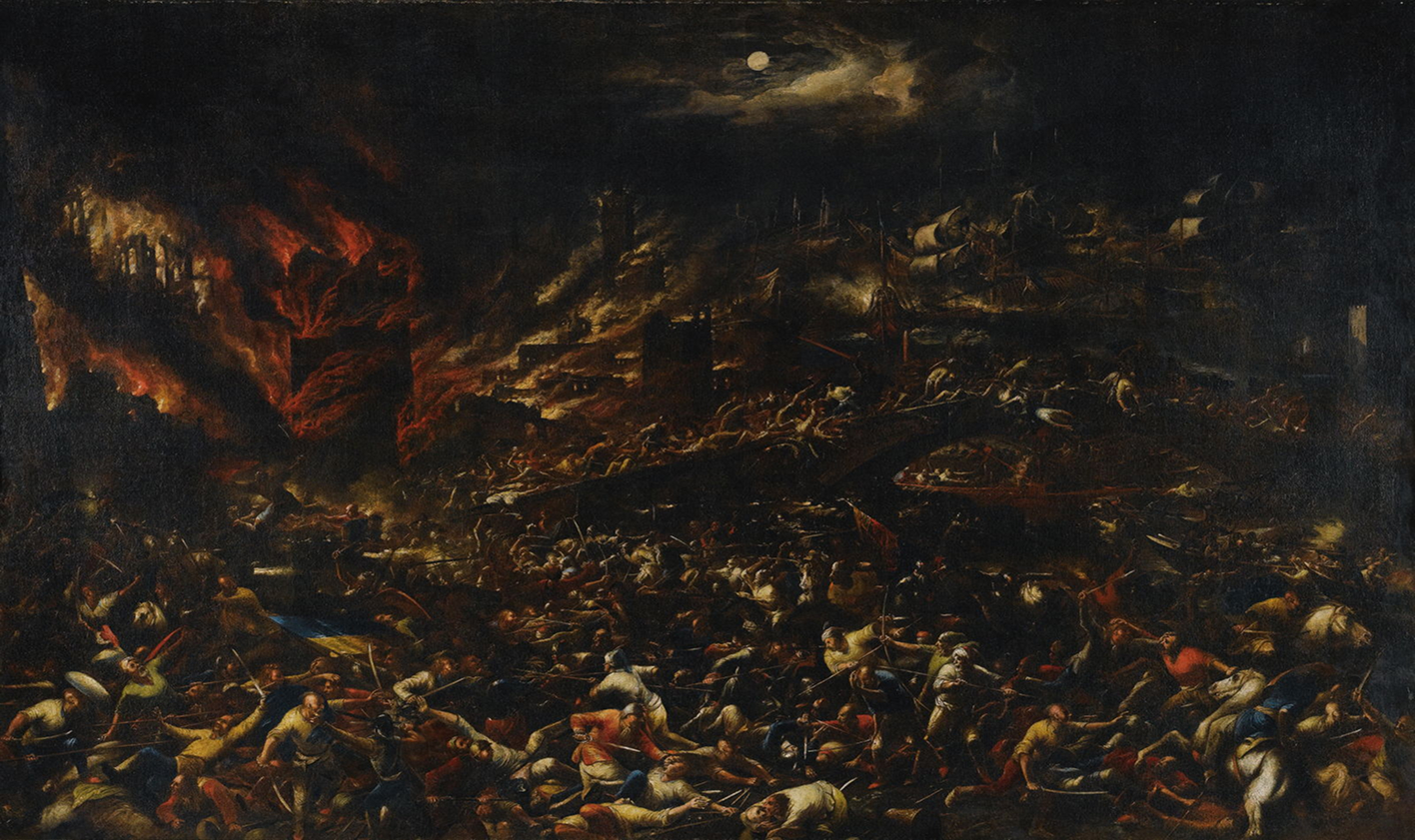
Troy burns in Gillis van Valckenborch's painting. The buildings crumble, the streets run with chaos, and the world as it was once known is gone. But here's the most terrifying part: the real damage isn't in the physical destruction. It's in the minds of the people who've come to accept the ruins. They've become so used to the decay, so numb to the destruction, that they no longer even see it for what it is. This is what happens after the Trojan Horse completes its work. Not just devastation, but normalization of that devastation.
The horse didn't need to destroy the city through brute force. It simply needed to get inside, to be welcomed past the defenses, to wait for the right moment. The Greeks built it carefully, the Trojans accepted it eagerly, and by the time anyone realized what was happening, it was too late. The same pattern plays out with ideological trojan horses. They don't announce themselves as threats. They arrive as gifts, as progress, as liberation. And we pull them inside because we want what they promise. But what was once unthinkable, the collapse of common ground, has become our daily reality. Facts are no longer facts. Truth is no longer universal. Reality has become something flexible, shaped by personal beliefs and political allegiances.
But the worst part? We've stopped questioning it. We've stopped looking for solid ground. We've stopped asking why the world has turned into this fragmented mess. We've accepted the confusion, the division, and the chaos. We've learned to function in the ruins. And that's the most dangerous part. The Trojan Horse didn't conquer us with overwhelming force. It won by getting us to accept the madness as normal. We've stopped asking for clarity, for truth, for shared standards of evidence and reasoning. Instead, we're celebrating the "freedom" to believe whatever feels right, unaware that we've traded coherence for chaos.
We live in the wreckage now, surrounded by the ruins of what once was. The Trojan Horse has already done its damage. The question is: have we even noticed? Have we noticed how much of our shared reality has eroded, how deeply the foundations of truth and reason have been undermined? Or have we grown so accustomed to the chaos that we no longer even remember what it was like before? The horse is inside. The city has fallen. The only question left is whether we will find the strength to rebuild or whether we will continue to live in the ruins we've come to call home.