6th of June 2025 | 7 min read
Questioning the concept of ‘healthy perfectionism’
Trapped in the Bubble
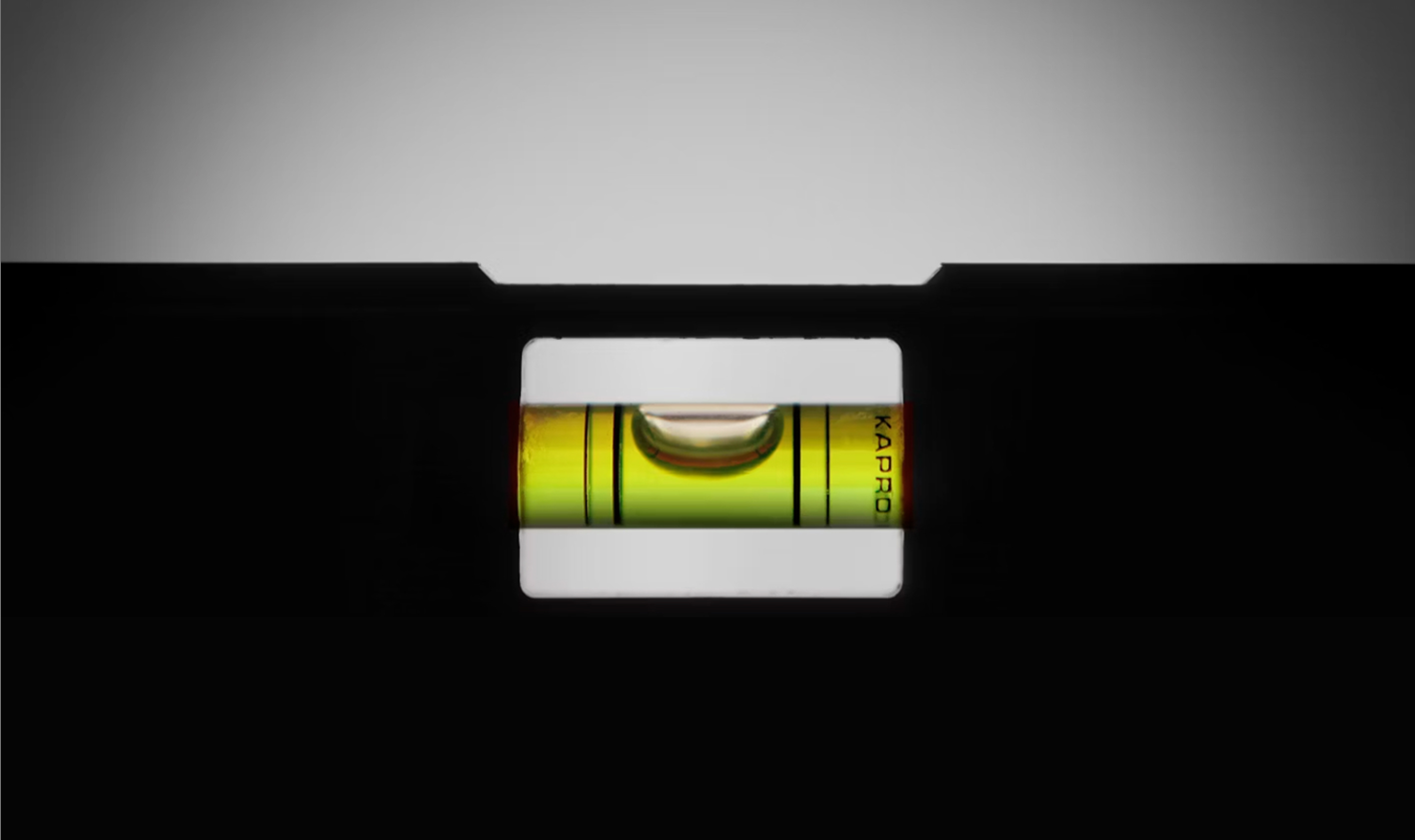
Look closely at the spirit level's bubble. That tiny sphere of air, floating in liquid, desperately trying to center itself between two lines. It shifts with the slightest movement, never quite settling, always responding to the smallest tilt. Here's what most people miss about that bubble: it doesn't need to be perfectly centered to tell you the surface is level. There's a reason those lines create a range, not a single point. Close enough actually works. But when perfectionism takes over, you become obsessed with that impossibly precise center, making microscopic adjustments that don't change whether the shelf will hold or the picture will hang straight. You're trapped in endless calibration, mistaking motion for progress.
I've watched brilliant creatives waste years in this bubble. The designer who redoes layouts until deadlines pass, convinced that one more iteration will finally feel right. The writer who never publishes because the opening could be stronger, even though it's already compelling. The entrepreneur who delays launch after launch because one more feature would make it complete, even though customers are already asking for what exists. They're not pursuing excellence anymore. They're pursuing an impossible standard that exists only in their heads. Here's the distinction that matters: excellence means doing work you're proud of, work that serves its purpose well, work that reflects your skills and care. Perfectionism means refusing to accept anything less than a fantasy. Excellence asks, "Is this good enough to be useful and valuable?" Perfectionism asks, "Is this absolutely flawless?" One question helps you move forward. The other keeps you stuck.
The cruelest part is that perfectionism disguises itself as professionalism. We celebrate the person who stays late, who obsesses over details, who "really cares" about getting everything right. But caring about quality and torturing yourself over insignificant details are not the same thing. The person redoing the same section for the eighth time isn't demonstrating dedication. They're demonstrating an inability to recognize when something is done. And yes, there's a real cost to that. While you're trapped making adjustments that don't materially improve the work, the world keeps moving. Competitors ship good products that gain traction. Colleagues share strong work that sparks conversations. Opportunities pass because you're still calibrating, still adjusting, still convinced that one more round of revisions will finally get the bubble to that impossible center point.
Ask yourself honestly: can you tell the difference between making something genuinely better and just making it different? Between adding value and adding anxiety? The bubble teaches us something important: there's a zone of acceptable. The lines aren't there by accident. They represent the range where the tool does its job properly. Your work has that zone too. Learning to recognize it, to trust your judgment about when you've reached it, is the skill that separates productive creators from paralyzed perfectionists. You don't need to break the bubble. You need to understand that close enough to center is exactly where it needs to be.
The Gold in the Cracks
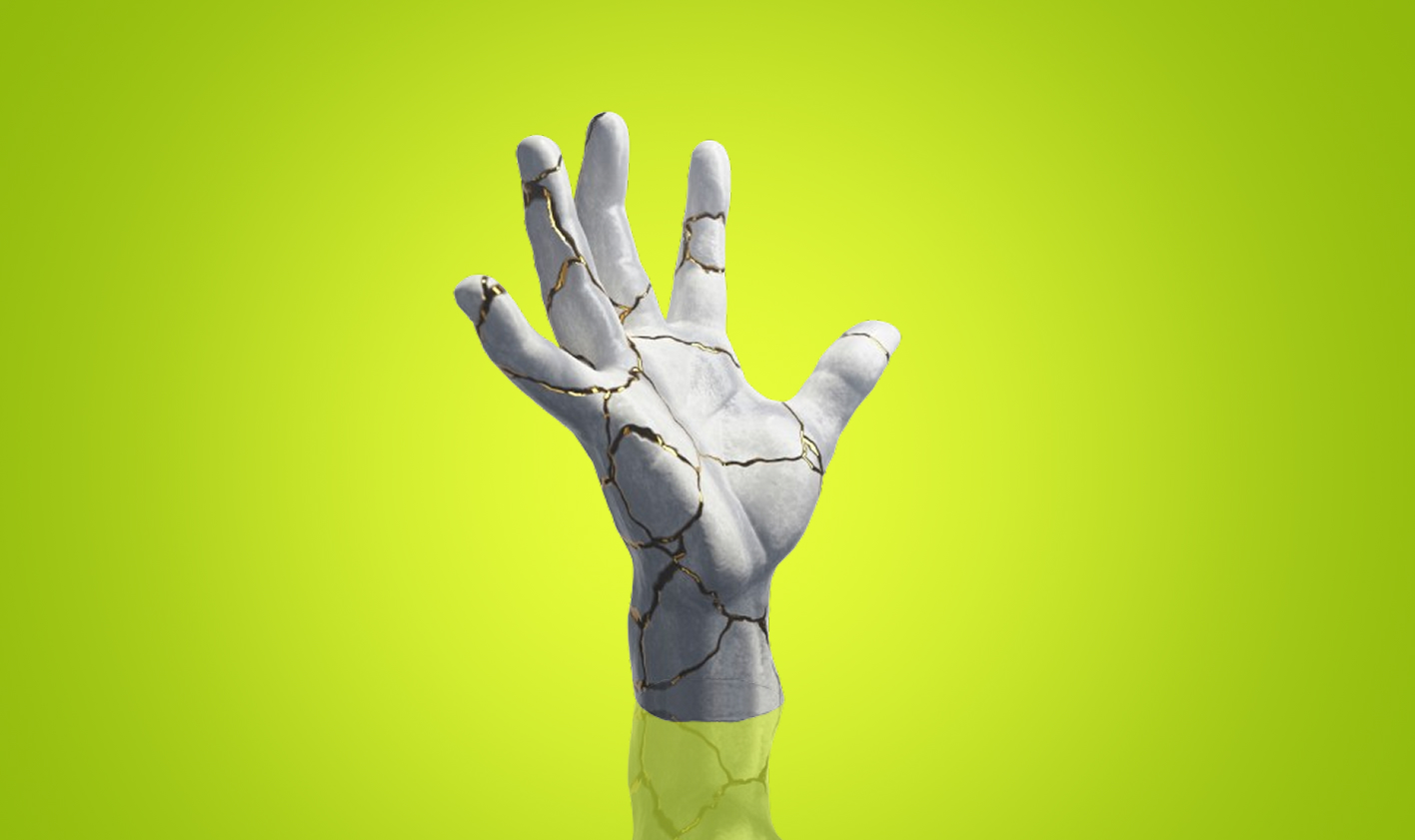
In the image above, you can realise something remarkable, the cracks in the sculpture aren't hidden. They're highlighted with gold, transforming what was broken into something more valuable than it was originally. But here's what's important to understand about Kintsugi: it's not celebrating carelessness. The original pottery was crafted with skill and intention. The breakage wasn't the goal. The art is in how you respond to imperfection when it inevitably arrives, how you integrate it into the story rather than pretending it never happened. This is the nuance perfectionism can't grasp: you can maintain high standards while accepting that perfection is unattainable. You can do excellent work that also carries traces of its humanity.
The best creative work lives in this space. It's crafted with care, executed with skill, and also willing to reveal the process. You hear the breath between notes in a live recording not because the musician is sloppy, but because capturing a genuine performance matters more than eliminating every human sound. You see brushstrokes in a painting not because the artist lacks technique, but because the texture and evidence of hand matter to the work's impact. The writing that moves you hasn't been edited into sterile perfection, but it has been edited thoughtfully to preserve voice while improving clarity. This is the balance: rigorous craft that knows when to stop refining and let the work breathe.
Here's where people misunderstand the message about embracing imperfection. It's not permission to ship garbage and call it "authentic." It's not an excuse for laziness or lack of craft. It's recognizing that there's a point where additional polishing doesn't add value, it just delays sharing. It's understanding that work can be both excellent and imperfect. That something can be ready even if you can imagine ways it could theoretically be better. The question isn't "Is this flawless?" The question is "Does this accomplish what it needs to accomplish? Does it serve its purpose well? Am I proud of this work?" If the answer is yes, then the small imperfections you're agonizing over probably don't matter as much as you think.
So the next time you catch yourself spiraling into another round of revisions, pause and assess honestly. Are you making this genuinely better, or are you just making it safer? Are you adding value that others will experience, or are you just trying to eliminate any possibility of criticism? Sometimes the work needs another pass. Sometimes it's already good enough and you're just afraid to let it go. The wisdom is in knowing the difference. Fill the cracks with gold when they appear, yes, but don't break the pottery on purpose just to have cracks to fill.
The Tower That Shouldn't Stand
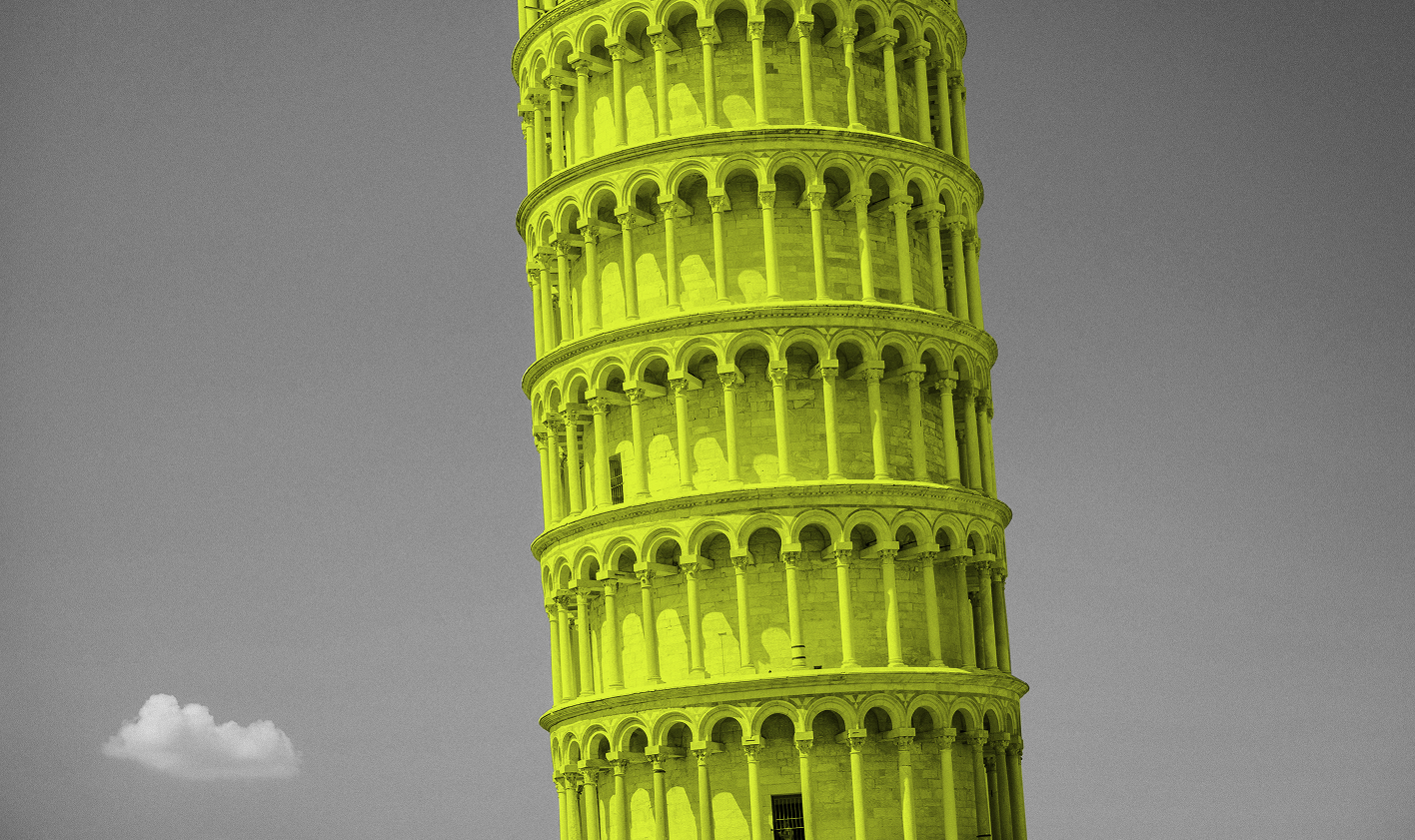
The Leaning Tower of Pisa was supposed to be straight. The tilt? That was a mistake. A design flaw caused by soft ground on one side. Construction was halted multiple times as engineers tried to correct the problem. By all measures of the original intention, the tower failed to meet its specification. And yet, millions of people visit it every year. It's one of the most recognizable structures on Earth. Not despite its imperfection, but because of it. Here's the nuance though: the tower still functions. It's still a bell tower. It still stands. The flaw didn't prevent it from serving its purpose, it just made it serve that purpose in an unexpected way. This is different from a tower that collapses because the builders didn't care about foundations. The Pisa tower works. It's just not perfect.
This distinction matters for your creative work. There's a difference between strategic imperfection and careless execution. Between knowing when something is good enough and not bothering to make it good in the first place. The tower leans, but it was still built with skill and care. The engineers didn't shrug and say "close enough" when pouring the foundation. They did their best with what they knew. When the problem emerged, they made adjustments and continued. The result isn't what they envisioned, but it still stands centuries later. Your work deserves that same combination of craft and adaptability. Do the work well. Care about quality. But also recognize that unexpected outcomes don't always mean failure. Sometimes they mean character.
You see this pattern in nature too, which is often held up as a model of "imperfection," but that's missing the point. Natural systems aren't careless, they're efficient. A tree doesn't grow perfectly symmetrical branches because perfect symmetry isn't necessary for the tree to thrive. The energy that would go into maintaining perfect form goes instead into adaptation, resilience, growth. The tree is optimizing for survival and function, not for matching some aesthetic ideal. Your creative work can learn from this. Put your energy into making the work effective, meaningful, and well-crafted. Stop putting energy into making it match an impossible ideal that doesn't actually improve its function.
The obsession with controlling every variable is what creates misery. But the answer isn't to abandon control entirely. It's to control what matters and release what doesn't. The tower leans, but its engineers controlled the aspects that allow it to stand safely despite the tilt. They didn't just throw up their hands and hope for the best. They applied their expertise to work with reality rather than against it. You can do the same. Apply your craft with care. Make good decisions. Execute well. And then accept that the result might not match your initial vision perfectly, but it can still be excellent. The ground beneath your work might be softer than you hoped. You can spend forever trying to straighten what tilts, or you can build something remarkable that stands anyway.
The Dance of Order and Chaos
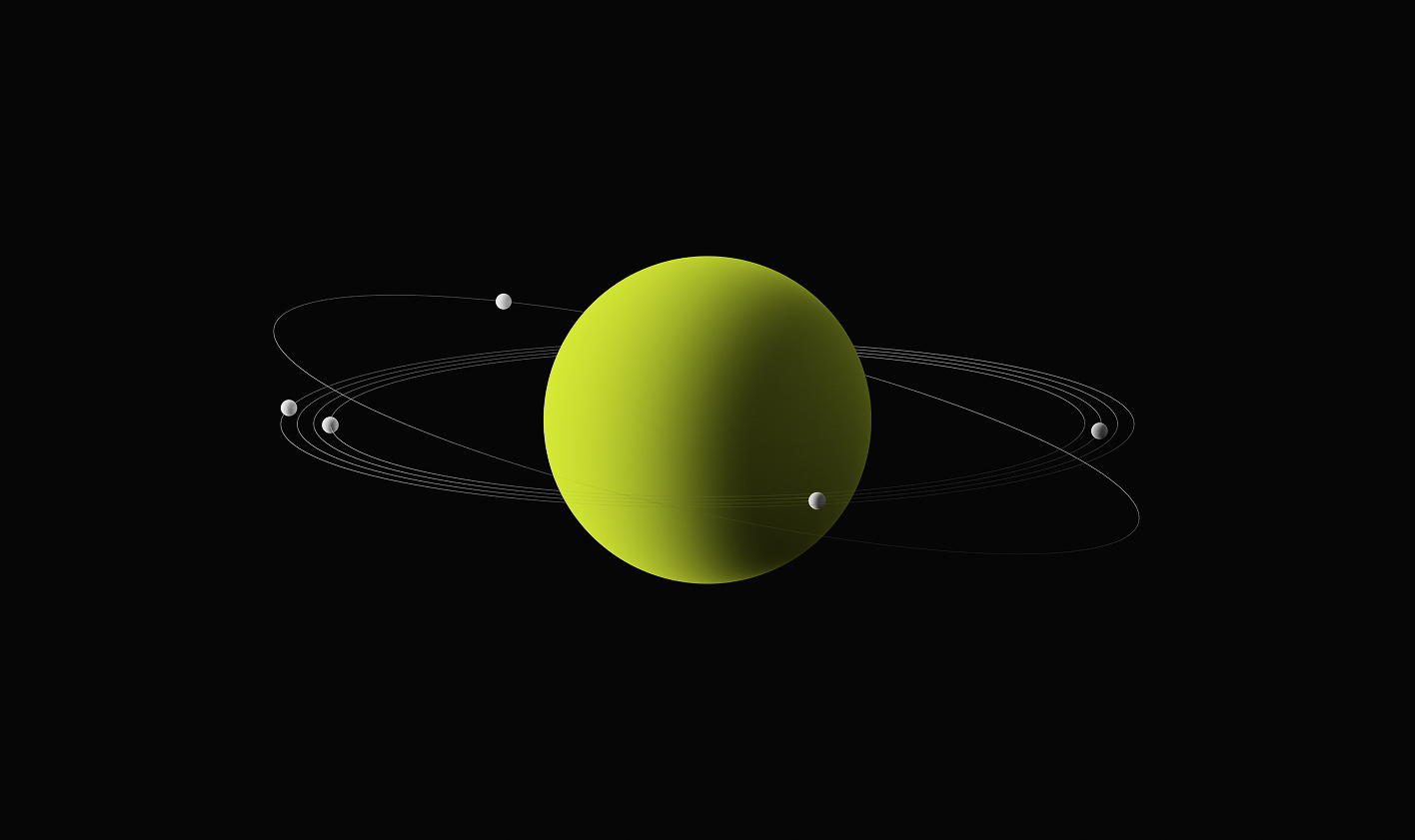
Look at any image of our solar system. Planets orbit in relatively predictable paths, held in place by gravity. That's the order. But zoom out further and you see the chaos: asteroid belts, rogue comets, the violent birth and death of stars. The universe doesn't choose between order and chaos. It contains both, in constant tension and balance. Here's what's crucial to understand: the order matters. Gravity isn't optional. Without it, planets don't form, solar systems don't exist, and life doesn't emerge. But gravity alone, without the chaos of cosmic collisions and stellar evolution, also creates nothing interesting. The magic is in the dynamic between these forces. Structure that allows for variation. Rules that create space for emergence.
You are part of that universe, which means you need both forces in your creative work. You need structure. Deadlines that force decisions. Processes that channel effort efficiently. Skills honed through deliberate practice. Standards that push you toward quality. This isn't optional. Without it, you're not embracing creative freedom, you're just producing noise. But you also need space for the unexpected. Room for the happy accident that only comes when you're not controlling every variable. Permission to explore an idea that doesn't fit the plan. Trust that sometimes the best outcome emerges from the gap between intention and execution. The question isn't order versus chaos. It's how much of each does this particular work need?
Perfectionism wants to eliminate all chaos and live entirely in order. Every action planned, every outcome predicted, every variable controlled. But that's not creation, that's manufacturing. And even in manufacturing, there are tolerances. Acceptable ranges of variation. Because absolute precision is impossible and, more importantly, unnecessary for the thing to work properly. The bolt doesn't need to be molecularly perfect to hold the joint. It needs to be within spec. Your creative work has specs too, even if they're not written down. Clear enough to communicate. Strong enough to hold up under use. Aligned enough with your vision to feel authentic. These are real standards worth meeting. "Absolutely flawless in every conceivable dimension" is not a real standard. It's a moving target that keeps you from ever finishing.
Think about the creators whose work genuinely moves you. They haven't achieved impact by being perfect. They've achieved it by being consistent, skilled, and willing to share strong work that resonates with people. They've found their rhythm between craft and inspiration, between planning and discovery. They know the difference between excellence and perfection. They understand that doing great work means caring deeply about quality while also recognizing when continued refinement crosses from improvement into diminishing returns. This is the wisdom that changes everything: you're not here to be perfect. You're here to do meaningful work. Work that requires skill, care, intention, and craft. Work that also requires the courage to say "this is ready" before it matches some impossible ideal. The universe contains both order and chaos because both are necessary. Your creative practice needs the same balance. Not perfection. Not carelessness. But excellence paired with the wisdom to know when you've reached it.