3rd of March 2022 | 5 min read
Why your brilliant idea might not be ready for the world
The Radius of an Idea
Most ideas are designed with a certain radius in mind, even if their creators never articulate it. Some are meant to travel far, to replace existing systems wholesale. Others are local by nature, solving problems that emerge within a narrow band of space, time, or behavior. Trouble begins when we mistake one for the other—when a tool built for a short journey is pushed into long-haul duty simply because it can move.
Consider the difference between walking to your corner store and doing your weekly grocery shopping. Both are forms of transport. Both involve carrying goods from one place to another. But the scale changes everything. A lightweight electric tricycle might be perfect for the first scenario: quick, efficient, human-scaled. Stretch that same solution across a larger distance, heavier loads, faster traffic, and suddenly what was elegant becomes impractical—or dangerous. The idea itself hasn’t failed. It has simply been asked to operate outside the environment it was designed for.
This is the mistake we make again and again in innovation culture: we assume that usefulness implies scalability. If something works in one context, we believe it deserves to work everywhere. But ideas are not neutral objects. They embed assumptions about infrastructure, behavior, risk tolerance, and social norms. Ignore those assumptions, and even a well-designed solution can collapse under the weight of expectations it was never meant to carry.
When we later call such outcomes “failures,” we flatten the story. We imply that the idea was flawed, the execution sloppy, or the ambition misplaced. Often, none of that is true. The more accurate diagnosis is quieter and more uncomfortable: the idea exceeded its natural radius, and the world it entered did not bend to accommodate it.
The World Isn’t Ready
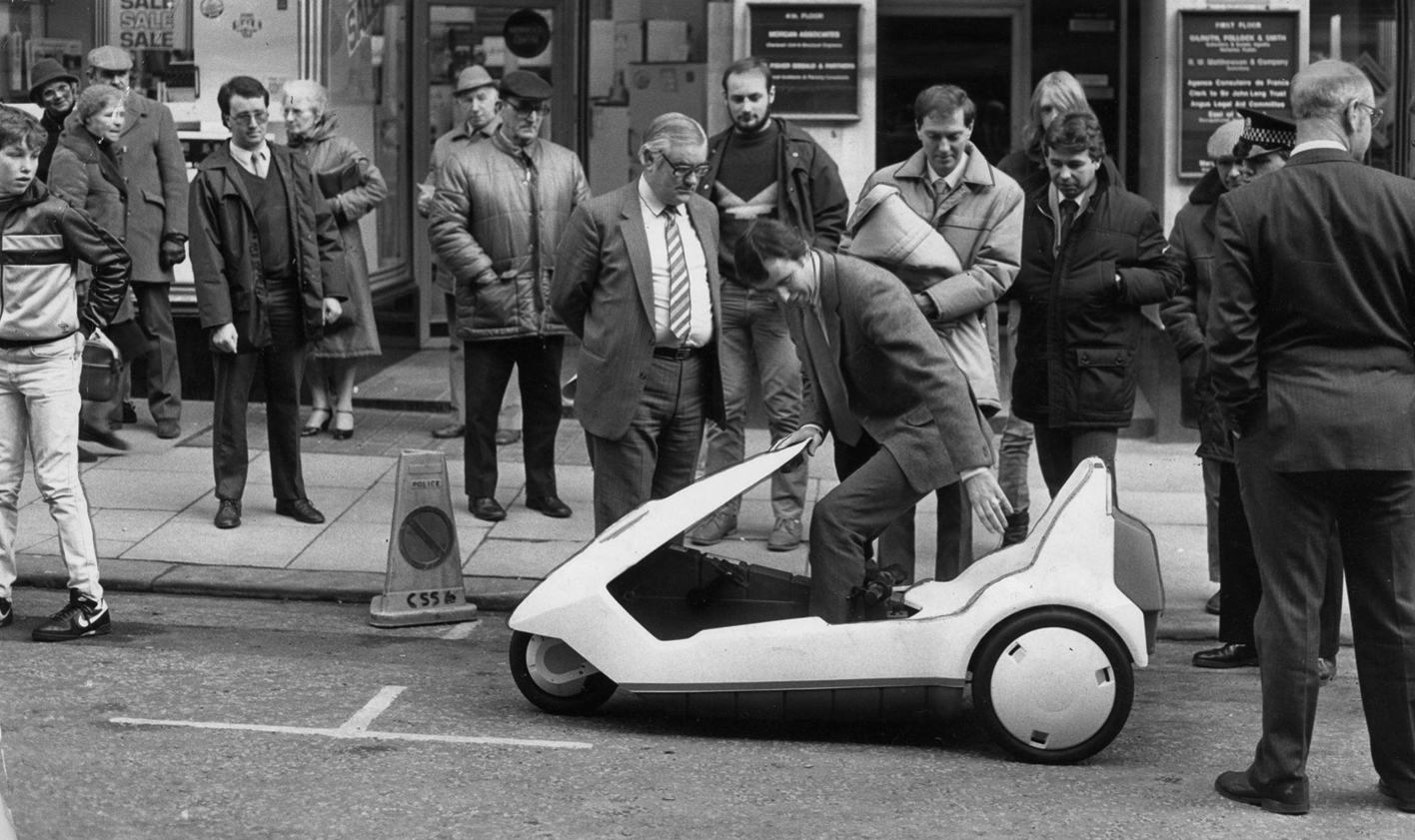
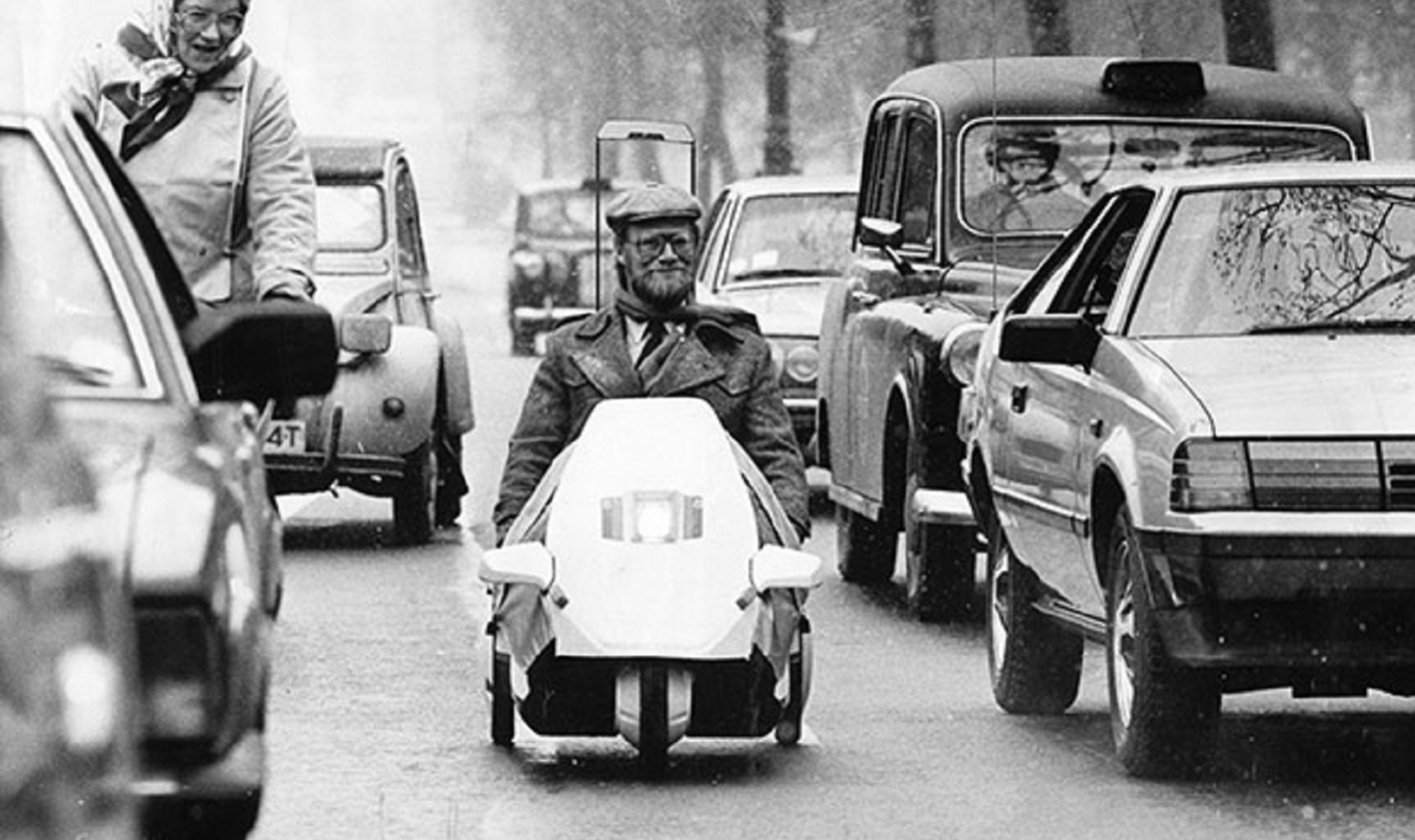
Sir Clive Sinclair’s C5 electric vehicle is often remembered as a punchline—a curious footnote in the history of British innovation. Launched in 1985, it was a small, battery-powered tricycle designed for short urban trips. Lightweight, energy-efficient, and unapologetically unconventional, the C5 was, on a technical level, entirely functional. It did what it claimed to do. What it couldn’t do was survive the world it was released into.
Britain in the 1980s was not designed for vehicles like the C5. Roads were built for cars. Cycle lanes were rare or nonexistent. Traffic moved fast, and visibility mattered. Riding a low-slung electric tricycle in shared road space wasn’t just impractical—it was genuinely unsafe. The C5 asked its users to expose themselves physically and socially, navigating streets that offered no protection and little sympathy. The risk wasn’t theoretical; it was immediate.
In retrospect, it’s tempting to say the C5 was “ahead of its time.” But that phrase lets us off the hook. It frames the world as temporarily deficient, as though progress is a single timeline waiting to catch up. A more honest assessment is that the C5 required an environment that did not exist: protected lanes, slower traffic, cultural acceptance of alternative mobility, and regulatory frameworks that treated small electric vehicles as legitimate participants in urban transport.
What was missing wasn’t innovation, but accommodation. The C5 didn’t fail because the idea of electric micro-mobility was wrong. It failed because the surrounding system refused to meet it halfway. Infrastructure, after all, is a form of technology—just one we tend to notice only when it’s absent.
Scale Is Not Neutral
The instinct to scale is deeply ingrained in how we talk about progress. Bigger markets, broader adoption, global reach—these are treated as self-evident goods. But scale is not a passive multiplier. It actively changes the nature of what is being scaled. An idea that works beautifully at one level can distort, degrade, or even invert its value when stretched beyond its intended scope.
This is where comparisons between very different ventures often go wrong. Take Microsoft’s early tablet computers in the early 2000s. Long before the iPad, Microsoft had already articulated a future in which flat, touch-enabled devices would become everyday tools. The hardware worked. The vision was clear. What was missing was the environment that would allow the idea to flourish.
Those early tablets ran desktop operating systems designed for keyboards and mice. Software had to be adapted rather than reimagined. There was no centralized app marketplace, no economic incentive for developers to create touch-first experiences, no cultural expectation that software should be lightweight, intuitive, and disposable. Using a tablet required effort, patience, and compromise — not because the idea was flawed, but because the surrounding ecosystem was hostile to it.
When Apple introduced the iPad years later, it wasn’t solving a new problem. It was releasing the same idea into a world that had quietly changed. The App Store already existed. Developers were fluent in touch-based design. Users had been trained, culturally and behaviorally, by the iPhone. The tablet didn’t succeed because it was more visionary, but because it arrived into an environment that could finally carry its weight.
Contrast that with more recent efforts in electric micro-mobility, including the IRIS eTrike developed by Sir Clive Sinclair’s nephew, shown below. These vehicles make far more modest claims. They don’t pretend to replace cars or overhaul cities overnight. Instead, they operate within clearly defined constraints: short distances, limited speeds, specific use cases. Crucially, they align themselves with environments that already exist—or are at least emerging—rather than betting everything on a speculative future.
The lesson here isn’t about ambition versus caution. It’s about respecting the transformative power of scale. When you enlarge an idea, you don’t just increase its impact—you increase its dependencies. Every additional meter, user, or mile introduces new variables. To ignore that is not optimism; it’s miscalculation.
Designing Within Limits
One of the most persistent myths in innovation is that the world is a blank canvas, waiting to be reshaped by superior ideas. In reality, the world is a dense mesh of constraints: physical, political, cultural, and psychological. Successful ideas don’t bulldoze those constraints. They negotiate with them.
Designing for the world you actually have requires a particular kind of humility—not the performative kind that downplays ambition, but the practical kind that asks hard questions early. Who will this protect? Where will it be used? What risks does it quietly shift onto the user? What behaviors does it assume, and are those behaviors realistic? These questions rarely appear in pitch decks, but they determine whether an idea survives first contact with reality.
This perspective also reframes how we think about “readiness.” The world is never fully ready for anything. It is always uneven, partial, and contested. Readiness is not a global condition; it’s local and specific. An idea might be perfectly ready for one neighborhood, one demographic, one regulatory pocket—and disastrously unready for another. Treating readiness as binary is a category error.
For builders and thinkers, this offers a gentler, more actionable takeaway than the usual cautionary tales. You don’t need to abandon your idea or wait for a mythical future. You need to understand the environment you’re stepping into and design within its limits. That might mean starting smaller. It might mean narrowing your claims. It might mean accepting that success, for now, looks less like disruption and more like survival.
In the end, the question isn’t whether your idea is brilliant. Many are. The harder question is whether it belongs in the world as it exists today—or whether it’s quietly assuming a different one. Answer that honestly, and you don’t just improve your chances of success. You learn to build with the world, rather than against it.